
According to Gov.UK, Fire and Rescue Services reported 19,135 vehicle fires in the year ending March 2023. Despite advances in vehicle safety, car parks still face potential fire hazards, both from accidental causes, increasing prevalence of electric vehicles, and deliberate acts of property arson.
This blog will explore the various fire hazards that threaten car parks, the unique risks these structures face, and effective safety measures and compliance regulations designed to mitigate these risks.
Sources of Fire Ignition in Car Parks
Fire safety in car parks is influenced by several potential ignition sources, ranging from mechanical failures to human negligence. Understanding these common causes is essential for effective risk mitigation.
The most common sources of ignition in car parks are:
- Fuel Leaks
Leaking petrol or diesel can come into contact with heat sources, causing a fire. - Overheated Engines
Overheated engines or exhaust systems, especially in enclosed or congested areas, are potential ignition points. - Arson
Deliberate ignition is a significant risk, particularly involving unattended vehicles. - Discarded Smoking Materials
Carelessly discarded cigarettes can easily ignite nearby flammable materials or fuel leaks. - Electric Vehicle (EV) Battery Malfunctions
Lithium-ion battery issues, such as thermal runaway, can result in challenging-to-extinguish fires in electric vehicles.
Fire Safety in Car Parks: Risk Factors
Effective fire safety in car parks, particularly multi-storey and underground types, requires addressing the unique challenges posed by their design and the high density of vehicles.
Rapid Fire Spread
Vehicle fires can spread quickly due to the nature of the materials involved. Traditional fuel systems and the close spacing of vehicles within car parks present a significant source of risk. Vehicle fires can spread from one car to another within two to three minutes, potentially creating a domino effect, with multiple vehicles catching fire in quick succession.
Evacuation Challenges
Evacuation from a multi-storey car park is challenging due to complex layouts, and potential low visibility caused by smoke. Enclosed car parks, especially underground, may have limited ventilation, resulting in rapid smoke accumulation, which reduces visibility and increases the risk of asphyxiation for both occupants and firefighters.
Structural Concerns
A vehicle fire can reach temperatures of over 815 degrees Celsius. In severe cases, such intense heat can weaken the concrete and steel structures of car parks, leading to partial or complete collapse, as demonstrated by the Luton Airport fire in 2023.
Electric Vehicle Fires
The increasing adoption of electric vehicles (EVs) in the UK has brought an increasing and new fire safety concern to the forefront. According to the RAC, as of this year there are an estimated 1.1 million battery electric vehicles throughout the UK, marking a significant increase from previous years. Car parks need to adapt to accommodate these vehicles safely, as EVs come with unique risks associated with their lithium-ion batteries. These batteries can experience thermal runaway—a dangerous condition where overheating leads to a self-sustaining reaction, resulting in extremely high temperatures, jet flames, and fires that are challenging to extinguish.
Although electric vehicle fires are relatively rare, they present distinct challenges:
- On average, extinguishing a petrol or diesel car fire takes around 30 minutes, whereas an electric vehicle fire can take between 4 to 5 hours to fully put out (BBC).
- Approximately 60% of vehicular failures in electric vehicles are linked to lithium-ion battery issues (ScienceDirect).
- the number of EV battery fires that occur while connected to EV charging sits in the range of 18% to 30%.(EvFireSafe)
These challenges highlight the need for specialised firefighting equipment, training, and updated protocols for fire safety in car parks. Electric vehicles contribute to an increased fire risk due to the extra wiring required for their advanced features, and the more common adoption of charging stations in modern car parks
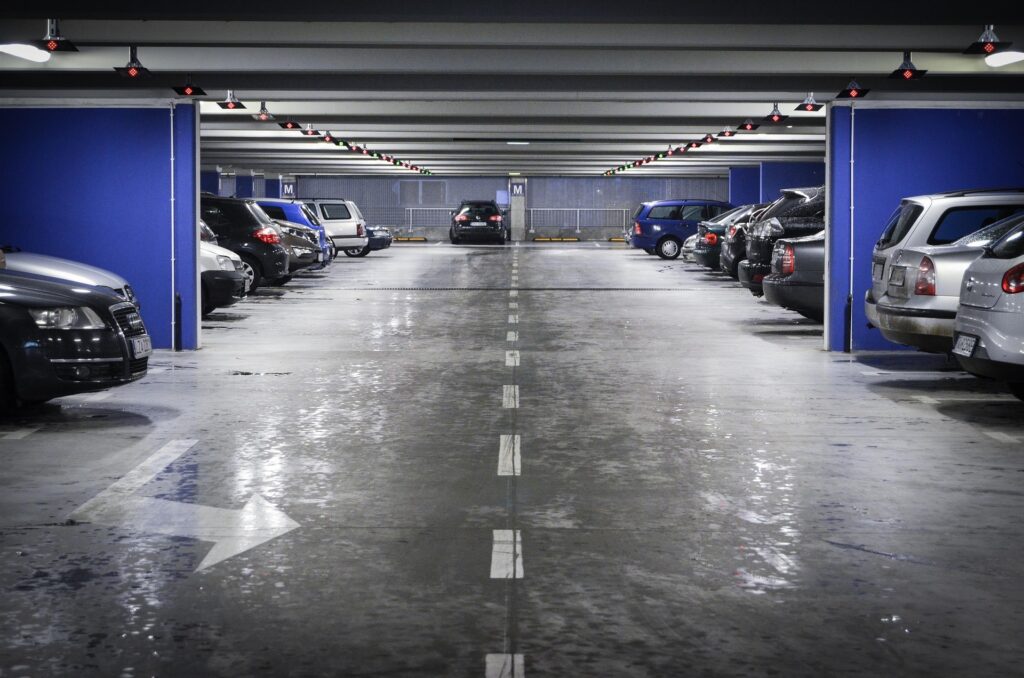
Fire Safety Solutions for Car Parks
Ensuring effective fire safety in car parks a combination of advanced technologies, compliance with UK regulations, and comprehensive safety strategies.
1. Fire Detection and Alarm Systems
Advanced fire detection systems provide early warnings, crucial for prompt evacuation and emergency response. These systems quickly identify the presence of smoke or fire, alerting both occupants and emergency services, helping to prevent fire spread and minimise damage.
2. Smoke Control and Ventilation Systems
Maintaining air quality and visibility during a fire is essential for reducing the risks posed by smoke inhalation and ensuring safe evacuation. These systems help limit the buildup of toxic gases and effectively control smoke spread. Ventilation can also be achieved through design planning with open-sided structures, natural openings, and effective airflow design.
3. Automatic Sprinkler Systems
Automatic sprinklers activate to contain and extinguish fires before they spread. Although not mandatory in all car parks, sprinklers are highly recommended in larger or high-risk environments to enhance fire safety compliance.
4. Impulse Fans
Impulse fans are a modern solution for directing smoke and toxic gases towards extraction points during a fire. impulse fans are an effective part of a fire-engineered approach, especially in enclosed car parks where natural ventilation is limited.
5. Fire Compartmentation
Compartmentation plays a vital role in preventing the spread of fire and smoke throughout buildings, particularly in car parks adjacent to other premises. Fire-resistant barriers ensure that the car park is isolated from the rest of the building, to limit fire damage and protect other areas.
6. Staff Training and Fire Extinguisher Stations
Staff should be well-trained in using fire extinguishers, directing evacuations, and managing emergencies. Fire extinguisher stations must be easily accessible and well-maintained, with staff prepared to handle small fires before they escalate.
Fire Safety Regulations for Car Parks
Car parks in the UK must comply with standard regulations, including the Regulatory Reform (Fire Safety) Order 2005, which is the main piece of legislation governing overall fire safety in buildings across England and Wales. This document provides comprehensive guidelines on workplace safety, fire risk assessments, and fire prevention measures.
The other relevant resources to car park fire safety are the Approved Document B (Fire Safety) and the BS 9999: Code of Practice for Fire Safety in the Design, Management, and Use of Buildings.
Approved Document B (Fire Safety) Volume 2
Approved Document B is part of the Building Regulations in England and Wales and is a statutory document, meaning compliance is required by law. It provides mandatory guidelines for fire safety in the construction and alteration of buildings, including structural fire resistance, means of escape, fire spread, and access for firefighting. Approved Document B is divided into two volumes: Volume 1 addresses fire safety for dwelling houses, while Volume 2 deals with buildings other than dwellings, including car parks.
BS 9999: Code of Practice for Fire Safety in the Design, Management, and Use of Buildings
BS 9999 is a British Standards code of practice that provides a comprehensive approach to fire safety in building design, management, and use. It is focused on integrating fire safety engineering solutions and risk assessments to optimise fire protection measures. BS 9999 is not a statutory regulation but rather a best-practice guide that offers a flexible, risk-based approach to fire safety, considering factors such as building use, occupant behaviour, and risk profile. It includes detailed provisions on fire detection and alarm systems, fire suppression systems, emergency escape routes, and fire safety management.
Approved Document B vs. BS 9999:
Although these regulations can be complex, the key difference is straightforward: Approved Document B sets out rigid legal requirements, while BS 9999 provides a more comprehensive and flexible approach to fire safety, making it especially useful for risk assessments in complex or unconventional buildings.
Professional Assistance for Fire Safety Compliance
For expert guidance on assessing fire risks, understanding UK fire safety regulations, advice on compliance, fire risk assessments, and safety solutions feel free to get in contact with 1st Attendance. Our expert-led courses provide practical guidance to help you assess fire risks and implement effective safety measures. Contact us today to learn more.