

Hot works training teaches you how to recognise the risks associated with activities that generate heat, sparks or open flames — such as welding, cutting and grinding — and how to control these hazards safely. It gives practical guidance on planning, preparation and safe working methods to help prevent fires and injuries.
A hot works training course typically covers the definition of hot work, common hazards, risk assessment techniques, control measures, correct use of personal protective equipment and how to implement a hot work permit system. This blend of theory and practice helps you keep people and premises safer.
A hot work permit training course focuses on when and how to complete a hot work permit — a formal safety document used to authorise and control hot work tasks — so that all precautions and risk controls are in place before work begins. It’s essential for managing fire risk in environments where hot work is frequent.
Hot work safety training reduces the chance of fires, explosions and serious injuries by helping workers identify hazards and put effective control measures in place before starting high-risk tasks. It also supports legal and risk management obligations for employers and duty holders.
Anyone who performs, supervises, manages or oversees hot work activities — including welders, cutters, maintenance teams and site supervisors — should take this training so they understand the risks and controls needed. It’s valuable for contractors and employees alike.
Yes — employers must ensure that anyone involved in hot work is competent and understands how to manage the associated risks. Completing accredited hot work safety training helps demonstrate that you’ve taken reasonable steps to meet health and safety duties.
Duration varies with format, but many recognised hot works training courses — including passport-style or permit-focused versions — run for one full day or can be delivered in shorter online modules that fit around your work schedule.
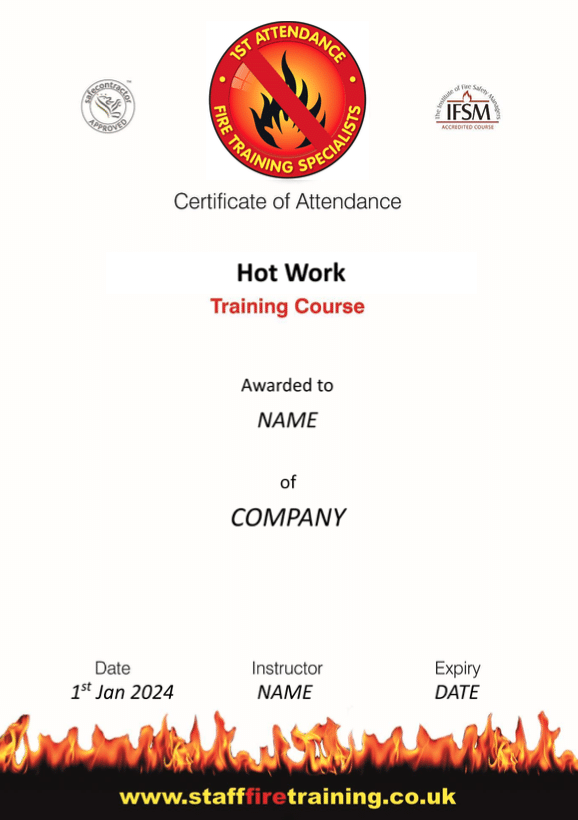
Most hot works training courses provide a certificate of completion or competence, which you can use as evidence for training records, audits or compliance checks. Certificates help show your organisation has addressed hot work fire risks.
Although UK law doesn’t prescribe a specific named “hot works training,” employers have a legal duty to provide suitable instruction, information and training to anyone undertaking hazardous activities like hot work to ensure their safety. Completing a formal hot works training course is widely recognised as best practice.
Yes — many accredited providers offer hot works training near you either at local training centres, on site at your workplace or through flexible online platforms. Searching online or contacting a reputable fire safety trainer will help you book a course that fits your needs.




Take a look at what our satisfied customers are saying.

Learn to manage fire risks with our Hot Work Training Course. Understand safety procedures, permits, and hazard control.
Service Type: hot work training